


How to Get Rid of Rats in Your Roof: Complete Brisbane Homeowner’s Guide
You’re lying in bed in the middle of a humid Brisbane night when you hear it. Scratching. Scurrying. A thud above the ceiling. At first, you try to ignore it. Maybe it’s possums. Maybe the house is settling.
Then it happens again.
Roof rats are one of the most common pest problems across Brisbane, especially in older Queenslanders, leafy suburban homes, and properties backing onto bushland or waterways. Areas like Ashgrove, The Gap, Carindale, Indooroopilly, and even newer estates around North Lakes regularly deal with rodent activity once the weather shifts.
The frustrating part is how quickly a few rats can turn into a full infestation. They breed fast, damage wiring, contaminate insulation, and leave behind smells that linger long after they’re gone.
The good news is that roof rat problems can be solved when you tackle them properly. This guide breaks down exactly how Brisbane homeowners can identify, remove, and prevent rats in roof spaces using practical methods that actually work.
Why Rats Prefer Roof Spaces
Brisbane’s climate, with its warm winters, humid summers, and plenty of suburban greenery, creates almost perfect conditions for rodents, giving rats easy access to food, water, and shelter year-round.
Your roof cavity offers everything they want in one place. It’s dark, warm, quiet, and usually undisturbed for months at a time. Insulation batts provide soft nesting material, while timber beams and electrical cables create protected travel paths across the ceiling void.
Traditional Queenslander homes are especially attractive to roof rats because they often have elevated foundations, ventilation gaps, ageing timber features, and easy access points around eaves or rooflines. Even Modern brick-and-tile homes aren’t immune. Rats squeeze through tiny gaps around solar panel installations, broken roof tiles, air-conditioning penetrations, or poorly sealed plumbing entries. And once inside, they settle quickly.
Roof cavities also keep rats safe from many predators, like cats and dogs which can’t reach them there, and people rarely enter the ceiling space unless there’s a maintenance issue. Also, during heavy Brisbane storms or periods of heavy rain, rodents often move upward into roofs in search of dry shelter.
Again, nearby food sources make things even easier for them. Fruit trees, pet food bowls, compost bins, chicken coops, and overflowing rubbish bins can support a rodent population without homeowners realising it.
And unlike mice, roof rats are exceptional climbers. They can scale brick walls, climb power lines, run along fences, and jump surprising distances from tree branches onto rooftops.
Signs Rats Are Living in Ceilings
Most homeowners notice the sounds first. Rats are nocturnal, so activity usually ramps up after sunset. You may hear scratching, running, chewing, or light thumping noises above bedrooms or hallways between midnight and dawn.
Note that the sound pattern matters. Mice tend to create lighter, rapid scratching noises. Rats sound heavier. You’ll often hear longer runs across ceiling beams or sudden stops as they move through insulation.
Another common sign is droppings. Roof rat droppings are dark, spindle-shaped, and roughly the size of a grain of rice. They’re often found near entry points, around insulation, or along ceiling joists. Fresh droppings appear moist and shiny, while older ones become dry and crumbly.
Then there’s the smell. A strong ammonia-like odour inside the roof cavity or near ceiling vents usually points to rat urine buildup. In Brisbane’s humid weather, these smells can become suffocating in a short time.
One might also notice:
- Chew marks on timber, wiring, or stored boxes
- Disturbed or flattened insulation
- Greasy rub marks along beams or wall edges
- Small holes near eaves or roof gaps
- Pets staring at ceilings or acting agitated at night
One overlooked sign is visible nesting material. Rats drag insulation, paper, leaves, cardboard, and fabric scraps into hidden corners to build nests. These nests are usually tucked behind insulation batts or near warm electrical components.
Health and Electrical Risks
Roof rats create genuine health and safety risks inside homes. One major concern is disease transmission. Rats can spread many bacterial infections through their urine and droppings.
Fleas and mites are another issue. When rats nest in roof cavities, parasites often spread through the home. Some Brisbane homeowners first realise they have rats only after noticing unexplained flea activity despite having no pets.
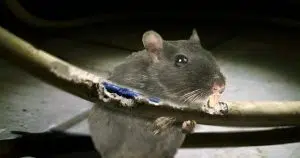
The biggest hidden danger, though, is electrical damage. Rodents constantly gnaw to keep their teeth from overgrowing. Electrical wiring becomes an easy target. Over time, rats strip protective cable insulation, exposing live wires inside the ceiling, which then creates a serious fire hazard.
Electricians across Brisbane regularly discover chewed wiring during ceiling repairs or lighting installations. In some cases, homeowners only discover the damage after lights begin flickering, circuits fail, or burning smells appear.
Furthermore, water pipes, air-conditioning ducting, solar cables, and NBN wiring can also be damaged.
Financially, one should keep in mind that ignoring roof rats almost always makes the situation more expensive later.
DIY Roof Rat Removal Methods
If one catches the problem early, there are several practical steps one can take for themselves before calling for professionals.
Safety comes first. Never enter a roof cavity without proper protection. Wear thick gloves, long sleeves, enclosed footwear, eye protection, and a quality dust mask or respirator. Ceiling spaces in Brisbane can become extremely hot, so avoid entering during the middle of the day.
Start by identifying active areas. Listen carefully at night to pinpoint movement. During daylight, inspect the roof cavity with a torch for droppings, chew marks, nesting material, or rub marks.
Next, remove accessible food sources around the property. Store pet food indoors, clean fallen fruit from gardens, secure rubbish bins tightly, and avoid leaving bird seed outside overnight.
Once you know where the rats are active, set traps along their travel paths. Rats rarely move randomly. They prefer running along beams, edges, and established routes rather than crossing open spaces. Position traps perpendicular to walls or beams with the trigger side facing the travel path.
Remember, many Brisbane homeowners make the mistake of using too few traps. For active roof infestations, one or two traps usually won’t cut it. Multiple traps placed strategically across active areas produce far better results. Also keep in mind to keep children and pets away from all baited areas.
If you’re using poison baits, understand the downside. Rats often die inside inaccessible walls or insulation, creating severe odours and attracting insects. That’s why many professionals prefer trapping over poison for roof infestations.
Best Traps and Bait Options
It’s very important to remember that not all rodent control methods work equally well in roof cavities.
Snap traps remain one of the most effective solutions for roof rats when used correctly. They provide fast results, allow confirmation of catches, and avoid the hidden carcass issue associated with poisons. In case one is wondering, the larger wooden or heavy-duty plastic snap traps generally outperform tiny mouse traps.
Live traps are another option, though they require consistent monitoring and humane disposal practices. These are generally preferred by homeowners uncomfortable or uneasy with kill traps, but then again, these are far less effective during larger infestations.
Bait choice matters more than many people realise.
Forget cheese. In Brisbane homes, roof rats are usually more attracted to high-protein or oily foods.
The most effective bait options often include:
- Peanut butter
- Salted peanuts
- Pumpkin seeds
- Bacon pieces
- Nut spreads
- Dried fruit
Peanut butter remains a favourite because it sticks firmly to traps and forces rats to engage the trigger.
Next, Placement is critical. Rats prefer protected edges and elevated routes. Place traps near beams, entry points, or dark corners where droppings are visible. In roof spaces, securing traps to beams with cable ties can prevent them from shifting.
If trap activity suddenly stops despite signs of rats remaining, don’t assume they’re gone. Rats become cautious around unfamiliar objects. Rotating bait types or relocating traps slightly often restores results.
Professional works:
Bait stations containing rodenticides should only be used carefully and ideally by licensed professionals.
Improper poison placement can expose pets, wildlife, or even children to dangerous chemicals. Brisbane properties near bushland areas also need extra caution to avoid harming native animals.
Why Roof Infestations Spread Quickly
Rats reproduce incredibly fast under ideal conditions, and Brisbane’s warm climate allows breeding almost year-round.
Female roof rats can become pregnant at just a few months old. The gestation period lasts for only about three weeks, and a single litter may contain six to twelve babies. Now imagine multiple breeding pairs hidden inside a warm roof cavity with constant shelter and nearby food. Within weeks, activity levels can explode.
Young rats mature quickly and begin reproducing. That’s why homeowners often go from hearing occasional scratching to constant movement seemingly overnight.
The infestation also spreads physically throughout the property. Rats explore wall cavities, kitchens, garages, and outdoor storage areas while searching for food and nesting locations. Once established, they create scent trails that attract additional rodents.
Another reason for quick spreading is territorial behaviour.
Dominant rats establish nesting zones and travel routes, pushing younger rats into new sections of the home. This expansion creates wider contamination and increases structural damage.
During cooler Brisbane months, roof spaces become even more attractive because they retain warmth. And this seasonal shift often triggers sudden increases in indoor rodent activity.
How Professionals Inspect Roof Cavities
Professional roof rat inspections go far beyond simply throwing bait into the ceiling. An experienced Brisbane pest technician approaches the problem systematically.
The process usually begins outside. Technicians inspect rooflines, gutters, eaves, fences, vegetation, and surrounding structures to identify likely entry routes. Overhanging tree branches are a major culprit in leafy suburbs.
Inside the roof cavity, professionals look for:
- Fresh droppings
- Grease trails
- Active nesting zones
- Chewed wiring
- Water sources
- Damaged insulation
- Structural entry gaps
Many companies now use thermal imaging tools to detect movement or nesting hotspots hidden beneath insulation.
Tracking dust is another useful method. Fine, non-toxic powder may be applied along suspected travel routes. When rats move through it, their footprints reveal activity patterns and nesting locations.
Professionals also assess the scale of infestation. A single rat requires a different strategy than an established breeding colony spread across multiple roof sections.
Most importantly, good technicians don’t just focus on removal. They investigate why the infestation occurred in the first place. That includes checking nearby food sources, drainage issues, roof damage, and construction gaps commonly found around solar panel systems, air-conditioning penetrations, or ridge caps.
This inspection phase is often what determines whether the problem remains solved long-term.
Roof Entry Point Sealing Methods
Getting rid of rats means very little if they can simply re-enter next week. Roof rats only need tiny openings to get inside. Gaps around roofing sheets, cracked vents, loose flashing, broken tiles, and uncapped wall penetrations can all become access points.
Professional exclusion focuses on permanently blocking those routes. Steel wool is commonly used for temporary gap filling as rats struggle to chew through it. For lasting repairs, metal mesh, flashing, cement products, or rodent-proof sealants work better.
Weep hole covers are especially useful on brick homes. These small vents allow moisture drainage but can also provide rodent access if left unprotected. Properly fitted covers maintain airflow while blocking pests.
Solar panels create another common issue across Brisbane. Rats frequently nest beneath panels because they provide shade, warmth, and protection from rain. Specialised mesh barriers installed around panel edges help stop rodents from accessing these spaces.
Ridge caps, roof vents, and plumbing penetrations should also be checked carefully. Even a gap the size of a coin may be enough for a determined roof rat.
Tree management matters too. Branches hanging over gutters effectively act like highways into roof spaces. Trimming them back significantly reduces access opportunities.
One should always remember that exclusion isn’t glamorous work, but it’s often the difference between temporary relief and permanently solving the problem.
Long-term Roof Rodent Prevention
Long-term prevention usually includes reducing food, water, and shelter opportunities.
Here’s a practical prevention checklist Brisbane homeowners can follow:
- Trim tree branches at least one metre away from the roofline
- Remove fallen fruit from gardens regularly
- Store pet food in sealed containers
- Keep outdoor bins tightly closed
- Clean barbecue areas after use
- Repair damaged roof tiles or vents quickly
- Install door seals on garages and sheds
- Avoid cluttered storage areas inside roof cavities
- Check solar panel edges for gaps or nesting signs
- Inspect ceilings yearly for droppings or chew marks
Backyard fruit trees are a surprisingly common contributor to rat activity. Mangoes, mulberries, pawpaw, figs, and citrus trees provide easy feeding grounds during Brisbane summers. One doesn’t necessarily need to remove them, but keeping fallen fruit cleaned up makes a big difference.
Water sources matter too. Leaking taps, pet bowls, clogged gutters, and poorly drained areas can support local rodent populations.
Remember, prevention works best when it becomes part of routine home maintenance rather than a one-off reaction after hearing scratching noises.
Cost of Roof Rat Control in Brisbane
One of the first questions homeowners ask is how much professional roof rat treatment actually costs.
The honest answer is that pricing varies depending on the size of the property, severity of infestation, accessibility of the roof cavity, and how much exclusion work is required.
For a standard Brisbane home with a relatively minor infestation, basic professional treatment often starts around a few hundred dollars.
Larger homes, multi-storey properties, or severe infestations involving extensive sealing work and follow-up visits can cost significantly more.
Several factors influence pricing:
- Roof accessibility
- Size of ceiling cavity
- Number of active rats
- Extent of electrical or insulation damage
- Need for exclusion repairs
- Presence of solar panels
- Frequency of follow-up visits
Notice that many homeowners focus only on the upfront treatment price, but that can be misleading. A cheap bait-only service that ignores entry points often leads to recurring infestations and repeated callouts.
Comprehensive inspections, proper trapping strategies, and exclusion work generally provide better long-term value.
If electrical damage is discovered, electricians may also need to repair wiring separately.
That’s another reason acting early matters. Small infestations are usually far cheaper to handle than widespread roof cavity colonies left untreated for months.
FAQs
How do rats get into Brisbane roofs?
Roof rats are excellent climbers. They commonly enter through gaps around eaves, broken roof tiles, solar panels, vents, plumbing penetrations, or overhanging tree branches touching the roof.
Are rats in the roof dangerous?
Yes. Rats can spread bacteria, contaminate insulation, introduce fleas or mites, and chew electrical wiring, which creates a serious fire risk.
Will rats leave the roof on their own?
Usually not. If food, warmth, and shelter remain available, rats tend to stay and breed. Without proper removal and exclusion work, infestations typically worsen over time.
Is rat poison safe to use in ceilings?
It can be risky. Poisoned rats often die inside inaccessible walls or insulation, creating strong odours and secondary pest issues. Improper use can also endanger pets or wildlife.
How long does professional roof rat treatment take?
Most standard treatments are completed within one visit, though severe infestations may require follow-up inspections and additional sealing work over several weeks.
Hearing rats in the roof is stressful, especially when the noises keep you awake night after night. But roof infestations are extremely common across Brisbane, and they can be handled effectively with the right approach.
The key is acting early.
The longer rats remain inside a ceiling cavity, the more damage, contamination, and breeding activity occur behind the scenes. Combining proper trapping, thorough inspections, and professional exclusion work gives homeowners the best chance of solving the problem permanently.
And once those late-night scratching sounds finally disappear, you’ll wonder why you waited so long to deal with it.