


Signs of a Rodent Infestation: How to Detect Rats and Mice Early
Rodents rarely announce their arrival. Most homeowners don’t see the first mouse or rat that enters the property. Instead, they notice small clues—a scratching sound in the wall at night, a few mysterious droppings behind the pantry, or a food package that suddenly has tiny chew marks along the edge.
The challenge is that rodents are experts at staying hidden. By the time one sees them running across the floor, there’s a good chance they have been living inside the home for weeks. Knowing how to spot the warning signs early can save one from expensive repairs, contaminated food, and a rapidly growing infestation.
Why Early Rodent Detection Is Important
Rodent problems can escalate much faster than most people realise. Most homeowners assume seeing a single mouse isn’t a major concern. But, unfortunately, rodents don’t usually travel alone. If one has found a reliable food source and safe shelter inside your home, others often follow.
Mice reproduce at an astonishing rate. A small breeding population can expand into dozens of rodents within a matter of months. Rats reproduce at a lesser rate than mice, but still can create a significant infestation in a surprisingly short period.
The longer rodents remain undetected, the more damage they cause. They chew electrical wiring, destroy insulation, contaminate food, damage stored belongings, and create sanitation issues throughout the property.
Early detection can mean the difference between setting a few traps and dealing with thousands of dollars in repairs, extensive cleaning, and structural damage.
Common Signs of a Rodent Infestation
Rodents leave clues behind them at almost every place they travel. Most infestations reveal themselves through three primary indicators: sight, sound, and smell.
Visual signs include droppings, gnaw marks, grease smudges, nesting materials, and damaged food packaging.
Audible signs often involve scratching, scurrying, squeaking, or movement inside walls and ceilings.
Odours may range from a faint ammonia smell to a strong, unpleasant stench caused by accumulated urine or a deceased rodent hidden in a wall cavity.
Remember, even one of these warning signs deserves attention. Multiple signs almost always indicate an active infestation.
Rodent Droppings: What to Look For
Droppings are often the first and most reliable sign of rodent activity. Fresh droppings appear dark, moist, and shiny. They typically have a soft texture when first deposited. As they age, they become dry, brittle, dull, and greyish in appearance.
The size and shape can help identify the type of rodent involved. Mouse droppings are usually small, about the size of a grain of rice, with pointed ends. Rat droppings are significantly larger, thicker, and more capsule-shaped.
One commonly finds droppings behind appliances, under sinks, inside cabinets, near pet food, along walls, and in attic spaces. Rodents tend to travel the same routes repeatedly, so droppings often appear concentrated in specific locations rather than scattered randomly throughout the home.
Finding fresh droppings daily is a strong indicator that rodents are actively occupying the property.
Gnaw Marks and Property Damage
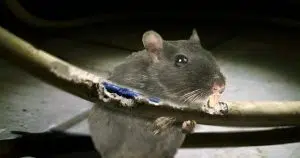
Their constant need to chew is one of the defining characteristics of rodents. Their front teeth never stop growing. To keep those teeth from becoming too long, rodents must continually gnaw on hard surfaces.
This behaviour creates a surprising amount of property damage. Fresh gnaw marks on wood appear lighter in colour because newly exposed wood hasn’t yet darkened with age. On drywall, one may notice rough-edged holes or chipped sections near corners and utility penetrations. Plastic pipes often display scrape marks, grooves, or partially chewed sections.
Rodents also chew electrical wiring, which creates a serious fire hazard. They may also damage furniture, cardboard boxes, stored belongings, and even certain types of insulation.
Think of rodent chewing as ongoing maintenance from the rodent’s perspective. They’re not trying to destroy your home—they’re simply keeping their teeth manageable. Unfortunately, the result is very costly for you.
Unusual Noises in Walls, Ceilings, and Attics
Most homeowners first suspect rodents because of what they hear after dark. Rats and mice are primarily nocturnal, meaning they are most active at night when most of us humans are asleep.
Common sounds include scratching inside walls, rapid scurrying across ceilings, squeaking, rustling, and occasional thumping sounds in attic spaces. Mouse activity often sounds lighter and quicker, like tiny feet moving rapidly through insulation. Rat activity tends to produce heavier, more deliberate noises.
These sounds frequently originate from attics, wall cavities, crawlspaces, and areas surrounding plumbing or electrical lines.
Nesting Materials and Hidden Rodent Shelters
Note that rodents don’t just simply wander through homes—they establish nests. These nest functions much like a safe bedroom for them. It’s where they sleep, breed, and take shelter from outside threats.
Mice and rats commonly build nests using shredded paper, cardboard, fabric, insulation, cotton, dried plant material, and even pet fur. These nests often resemble loose balls of mixed debris tucked into protected locations.
A homeowner cleaning out a garage or attic may suddenly discover a pile of shredded material hidden behind boxes. That’s often a strong indication that rodents have been actively using the area.
Common nesting areas include attics, wall voids, storage boxes, behind appliances, inside furniture, beneath cabinets, and within cluttered storage spaces.
Grease Marks and Rodent Runways
Rodents are creatures of habit. Rather than exploring at random, they typically follow the same pathways repeatedly when travelling between food, water, and nesting sites. Over time, oils and dirt naturally present on their fur begin transferring onto surfaces. These marks often appear as dark smudges or streaks along baseboards, pipes, wall edges, beams, and frequently travelled routes.
In severe infestations, these “runways” become surprisingly visible. The marks may look insignificant at first glance, but they can provide valuable clues regarding where rodents are entering the home and which pathways they use most frequently.
Professional pest control technicians often rely on these signs when tracking rodent movement patterns.
Strange Odours Caused by Rodent Activity
Rodents have a distinct smell that any homeowner will recognise once he/she encountered it. Urine from mice and rats produces a stale, musky, ammonia-like odour that becomes stronger as contamination accumulates. The smell is often most noticeable in enclosed areas such as pantries, cupboards, crawlspaces, attics, and storage rooms.
A different odour develops when a rodent dies inside a wall, ceiling, or inaccessible cavity. The smell is usually strong, foul, and unmistakable. Many people describe it as a combination of rotting meat and decaying organic material.
One must take a note here that if some kind of powerful odour suddenly appears and seems concentrated in one area of the home, a deceased rodent may be hidden nearby.
Signs of Rodents in the Kitchen and Food Storage Areas
As kitchens offer easy access to food, water, warmth, and shelter, they are among the most attractive locations for rodents.
To look for signs of rodent activity in the kitchen, homeowners should inspect pantry shelves for chewed food packaging, torn cereal boxes, damaged pet food bags, and scattered grains or crumbs. Look behind appliances such as refrigerators, stoves, dishwashers, and freezers. These hidden spaces often accumulate food particles that rodents readily exploit.
One should check the backs of cabinets and under sinks for droppings, chew marks, and nesting materials. These are a few common signs to look for.
Health Risks Associated with Rodent Infestations
Property damage isn’t the only concern associated with rodents. In fact, rodents present a much bigger concern when it comes to health issues.
Rodents spread bacteria and pathogens through their urine, droppings, saliva, and contaminated nesting materials, and as a result, spread diseases like Hantavirus and Salmonella.
The next big health issue we need to worry about is food contamination from rodents.. A rodent may walk across countertops, pantry shelves, and food packaging after traveling through contaminated areas.
Rodent allergens can also affect indoor air quality. Sensitive individuals may experience respiratory irritation, allergy symptoms, or asthma flare-ups when infestations become severe. Remember, health risks increase significantly as the rodent population grows.
Common Areas Where Rodents Hide in Homes
If you want to look for common places where rodents may hide in our home, imagine viewing your home from a rodent’s perspective. Any dark, quiet area with limited human activity becomes potential real estate.
Rodents excel at exploiting hidden spaces. In attics, they nest within insulation and travel along rafters. In basements, they occupy storage areas, utility rooms, and dark corners. Crawlspaces provide warmth, protection, and access to plumbing lines.
Wall voids are particularly attractive because they allow rodents to move throughout the structure while remaining concealed. Dropped ceilings, garage storage shelves, utility chases, and spaces behind large appliances also provide ideal shelter.
How Rodent Infestations Grow Over Time
Just adequate food and shelter are what rodents need. Remember, infestations rarely remain small. A few mice entering a structure may seem insignificant at first, but very soon they are not. Their population can expand rapidly through repeated breeding cycles.
Young rodents mature quickly and begin reproducing within a relatively short timeframe. Each new generation with its increasing population increases its demand for food, nesting space, and travel routes. And as a result, as the numbers rise, so do droppings, odours, noise levels, and property damage.
What began as occasional scratching in the attic has now become widespread activity throughout multiple areas of the home. And just like the infestation has grown over time without you even realising it.
What to Do If You Notice Signs of Rodents
Nothing! Act immediately!
- Start by identifying and documenting signs of activity. Look for droppings, chew marks, nesting materials, and possible entry points.
- Store food in sealed containers and clean crumbs or spills promptly. Reduce clutter in areas where rodents may hide.
- Avoid handling droppings with bare hands. Wear gloves and follow safe cleaning practices.
- Inspect the home’s exterior for gaps around pipes, vents, utility penetrations, doors, and foundations.
The goal is to limit access to food and shelter while determining the extent of the infestation.
Preventing Future Rodent Infestations
Prevention is always easier than elimination. A few of the steps you could take:
Seal cracks, gaps, and openings around the home’s exterior. Steel wool combined with appropriate sealants is often effective because rodents struggle to chew through it.
- Keep garbage containers tightly closed.
- Store pet food securely and avoid leaving food out overnight.
- Trim tree branches that overhang the roof, as they can serve as convenient highways for rodents.
- Reduce outdoor clutter, remove excess vegetation near the foundation, and address moisture issues promptly.
These tiny little maintenance tasks performed consistently can have a dramatic effect in reducing the likelihood of future infestations.
When to Call a Professional Rodent Pest Control Service
If one hears ongoing activity, finds repeated droppings, discovers nests, or notices signs in multiple areas of the home, professional intervention is usually the most efficient path forward.
Store-bought traps can sometimes catch individual rodents. What they often don’t address is the larger picture. Many homeowners remove a few rodents only to discover the activity returns weeks later because the underlying problem remains unresolved.
A successful rodent control program involves locating nesting sites, identifying entry points, assessing population size, implementing targeted trapping strategies, excluding future access, and addressing contamination. Professional pest control services provide comprehensive solutions that address both the rodents and the conditions allowing them to thrive.
In Brisbane and nearby areas, where rodents are often found in homes, Auzzie Pest Control and CleanWee Cleaning are delivering amazing results with their professional treatments.
Frequently Asked Questions About Rodent Infestations
Can I eliminate a rodent problem using only DIY traps?
Small, isolated problems may respond to traps. Larger infestations often involve hidden nests and multiple access points that traps alone won’t resolve.
Does seeing a rodent during the day mean the infestation is severe?
Not always, but daytime sightings can indicate increased population pressure. When competition for food grows, rodents may become active outside their normal nighttime schedule.
How can rodents enter a home so easily?
Mice can squeeze through openings surprisingly small in size, while rats can exploit larger cracks and gaps. Utility penetrations, damaged vents, roof openings, and foundation gaps are common entry points.
Where are rodent nests most commonly hidden?
Attics, wall voids, crawlspaces, garages, storage rooms, and spaces behind appliances are among the most common nesting locations.
Conclusion
Rodent infestations rarely appear overnight, but they do grow quickly once established. The good news is that rodents leave clues long before the problem reaches a crisis point. Droppings, scratching sounds, gnaw marks, nesting materials, grease trails, and unusual odours are all early warning signs that shouldn’t be ignored.
The sooner these signs are identified, the easier it becomes to protect your property, your family’s health, and your peace of mind. If you suspect rodents have moved into your home, taking action immediately can prevent a minor issue from becoming a major infestation. A proactive approach today is one of the most effective ways to keep your home clean, safe, and rodent-free for years to come.
Also, don’t forget to get professional help. Talk and discuss with the best in business, like Auzzie Pest Control.