


Why DIY Wasp Nest Removal Can Be Risky
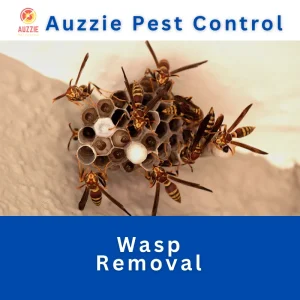
Finding a wasp nest around your Brisbane home can create an understandable urge to deal with it immediately. A nest under the eaves, inside a shed, in a roof void or near a busy outdoor area may seem like a small problem that a shop-bought spray can solve. The trouble is that wasp nest removal is not simply a matter of spraying insects and knocking down a nest. You may be dealing with a defensive colony, an unseen nest or a location that is difficult to access safely.
In Queensland (but just in Queensland, but anywhere around the world), wasp stings can cause pain, swelling and, in some people, severe allergic reactions. Wasps can also sting more than once because they generally do not leave their stinger behind like bees. Queensland Poisons Information Centre specifically advises getting a professional to remove nests.
For Brisbane homeowners and businesses, the safest approach is to avoid disturbing an active nest and have the situation assessed by an appropriately licensed pest management team (like ours – Auzzie Pest Control). Queensland regulates pest management activities involving pesticides, and a current pest management licence is required for regulated pest management work.
Understanding the Risks of DIY Wasp Nest Removal
DIY wasp nest removal can look straightforward because many products are sold for household pest control. However, the real challenge is:
- Identifying the nest,
- Understanding the wasp activity around it,
- Reaching the nest without exposing yourself to stings
- and Making sure the colony has actually been controlled.
A visible nest is not always the whole problem. Wasps may be entering and leaving a wall cavity, roof space or underground nest that you cannot see. Disturbing the wrong area can increase activity at the exact moment you are standing nearby.
Another issue is that household insecticides are not automatically suitable for every pest, location or application method. The Australian Pesticides and Veterinary Medicines Authority (APVMA) states that pesticide labels should be read carefully and products should be used only as directed. Using a pesticide in a way that is not specified on its label may create unnecessary exposure and may not provide effective control.
Risk of Wasp Stings
The most immediate concern during DIY nest removal is getting stung. A person may approach the nest thinking that one quick spray will be enough, but disturbing an active colony can bring wasps out quickly.
A wasp sting can cause immediate pain, redness, swelling and itching. More serious reactions are possible, including anaphylaxis. Queensland health guidance says that if someone collapses or has trouble breathing after a bee or wasp sting, Triple Zero (000) should be called immediately.
The risk is not limited to the person carrying out the job. Family members, children, neighbours, employees and pets may be nearby when wasps become active. That is one reason a professional assessment is particularly important when the nest is close to a doorway, play area, patio, workplace or other high-traffic space.
Aggressive Wasp Behaviour
Remember, not every wasp species behaves in the same way. Some solitary native wasps are comparatively less defensive, while social wasps can defend an established nest. A person who cannot confidently identify the species may not know how defensive the colony is likely to be.
The risk can increase when the nest is shaken, sprayed, struck or otherwise disturbed. Trying to remove a nest physically while wasps are still active can create a situation where several insects are flying around the same person at close range.
This is especially concerning when DIY removal is attempted without suitable protective clothing, a clear escape path and knowledge of where other colony members may be located. Rather than assuming that a nest is harmless because there are only a few wasps visible, it is safer to treat unknown nests with caution.
Hidden Wasp Nests Can Be Difficult to Find
One of the biggest problems with DIY wasp treatment is that the nest you can see may not be the only source of wasp activity. Some wasps build nests in wall cavities, roof voids, sheds, garages, ground holes and other sheltered spaces. Our technicians at Auzzie Pest Control identifies concealed areas such as walls, ceilings, roof spaces and underground locations as common places where wasp activity can occur.
Following wasps to find the nest can be misleading. They may enter a small opening and disappear into a cavity, making it difficult to determine exactly where the colony is located.
If you spray only the insects you can see, the nest may remain active. New workers can continue emerging, and the visible activity may return. Effective control begins with locating the source rather than simply treating the symptoms.
DIY Treatments May Not Eliminate the Nest
Aerosol sprays and other retail products may kill individual wasps on contact, but killing a few visible insects does not necessarily mean the colony has been eliminated. The treatment needs to reach the relevant area and be appropriate for the pest, nest type and application site.
There is also a temptation to use more product when the first application appears unsuccessful. That can increase chemical exposure without solving the underlying problem. APVMA guidance emphasises following the product label, including approved uses, application directions, precautions, storage and disposal instructions.
A professional wasp treatment can instead be planned around the nest location, level of activity, access and surrounding risks. The goal is not simply to make the wasps disappear for a few hours, but to control the colony and determine when the nest can be safely removed where appropriate.
Risks of Accessing Hard-to-Reach Wasp Nests
A wasp nest in a low garden shrub is very different from a nest under a high roofline or inside a ceiling cavity. Reaching the latter may involve ladders, awkward positions, roof access or working close to electrical and structural hazards.
When people try to combine a ladder or improvised access equipment with an active wasp nest, the consequences of a sudden swarm can be more serious. A startled person may lose balance, drop equipment or move unpredictably.
Hard-to-reach nests should be assessed rather than attacked. Professional technicians can consider access, protective equipment, treatment method and the surrounding environment before deciding how the nest should be handled.
Risks of Using Chemicals Incorrectly
Household pest products can be useful when used for their labelled purpose, but they are not risk-free. The APVMA states that the highest user risk can come from not using a pesticide as directed and advises consumers to read and understand the label before use.
Problems can arise when a person sprays into a cavity without knowing where the chemical will travel, uses too much product, mixes products, applies a product to an unapproved surface or ignores re-entry and safety directions.
It is also important to consider children, pets, food areas, waterways and other occupants. Domestic pest-control labels contain specific directions and precautions because the safest application depends on the product and intended use.
DIY Removal Can Drive Wasps Indoors
A nest may be located outside, but poorly planned treatment can alter where wasps move. If wasps are disturbed near a wall, window, eave, roof space or other building opening, they may move towards alternative routes or emerge in unexpected places.
That can turn a contained outdoor problem into an indoor nuisance. Suddenly seeing wasps around windows, lights or rooms can make the situation much harder to manage, particularly when the original nest location is hidden.
The practical lesson is simple: avoid disturbing the colony just to see what happens. Isolating the affected area and getting professional assistance can reduce the chance of turning one location into several.
Incomplete Wasp Nest Removal
Physically removing a nest does not always address the complete problem. If active wasps remain in a cavity or the nest is not fully controlled, further activity may continue after the visible nest has been taken down.
Auzzie Pest Control’s published approach involves — inspection and nest location, risk assessment, targeted treatment, confirmation of inactivity and nest removal where possible.
This matters because successful wasp control is about more than appearance. An empty-looking spot does not automatically mean the infestation has been resolved. A proper follow-up check can help confirm whether ongoing activity remains and whether prevention steps are needed.
When Should You Avoid DIY Wasp Removal?
There are situations where attempting DIY wasp removal is especially unwise. Avoid disturbing the nest when:
- The nest is large, active or surrounded by many wasps.
- The nest is inside a wall, ceiling, roof void or underground area.
- The nest is high above the ground or difficult to access safely.
- The nest is beside a door, walkway, playground, pool or busy work area.
- Children or pets cannot be kept away from the treatment area.
- You have previously experienced a severe allergic reaction to insect stings.
- You are not confident identifying the wasp or choosing an appropriate treatment.
- You would need a ladder, roof access or improvised equipment to reach the nest.
Queensland guidance recommends professional nest removal as a way to help prevent insect bites and stings.
For more information – Read our Blog.
Why Hire a Professional Wasp Pest Control Service?
A professional wasp pest control service brings a structured approach to a problem that can become unpredictable when handled casually.
A trained technician can inspect the property, identify the likely nest location, assess the risks and select a treatment approach suited to the situation. Queensland Health says pest management activities involving pesticides must be carried out by a person holding a current pest management licence.
At Auzzie Pest Control, our Brisbane wasp control service is designed around inspection, targeted treatment, safe nest removal where possible and practical prevention advice. Our team services residential and commercial properties and handles wasp nests in locations such as eaves, roof spaces, wall cavities, garages and outdoor areas.
The advantage of professional help is not just the equipment. It is the combination of pest identification, risk assessment, controlled application and experience in dealing with difficult nest locations.
Book us immediately for controlled, licensed and professional service right-away.
How to Stay Safe Until Professional Help Arrives
Once you discover a wasp nest, the safest first step is to leave it alone. Do not poke it, knock it down, seal an entry hole or repeatedly spray it from close range.
Keep children and pets away from the area and, where practical, close nearby doors and windows. Avoid mowing, trimming or using tools close to an active nest. Let people who use the property know that the area should be avoided.
If someone is stung, move away from the nest before treating the sting. Queensland guidance recommends washing the area, applying an ice pack and monitoring for concerning symptoms. If the person has difficulty breathing, collapses or shows signs of anaphylaxis, use an adrenaline autoinjector if available and call Triple Zero (000).
Frequently Asked Questions About DIY Wasp Nest Removal
Can I remove a wasp nest myself?
DIY removal is not recommended for an active or unknown nest, particularly when the nest is difficult to reach or the colony is large. Professional assessment can reduce the risk of stings and incomplete control.
Will wasp spray kill the whole nest?
Not necessarily. Killing visible wasps is different from controlling the colony. If the nest is hidden or the treatment does not reach the relevant area, wasp activity can continue.
What should I do if I find a wasp nest in my roof?
Do not disturb the roof space or attempt to reach the nest yourself. Keep the area clear and arrange an assessment by a licensed pest management technician.
Are wasp stings dangerous?
They can be painful and, in some people, can cause a severe allergic reaction. Wasps can also sting multiple times. Seek emergency help for signs of anaphylaxis such as breathing difficulty, throat swelling, dizziness or collapse.
Should I seal a hole where wasps are entering?
Avoid sealing the opening before the colony has been assessed and controlled. Blocking an active entry point without understanding the nest location can make treatment more difficult and may redirect wasp movement.
How long does professional wasp treatment take?
The time required depends on the species, nest size, access and location. A technician should assess the site and advise whether follow-up treatment or a later nest removal is appropriate. Auzzie Pest Control states that larger or hard-to-reach nests may require follow-up and that nest inactivity is confirmed before removal.
Conclusion
The biggest danger of DIY wasp nest removal is assuming that the job is simple because the nest looks small or accessible. An active colony can react quickly to disturbance, hidden nests can be difficult to locate, and incorrect chemical use can create additional risks.
For Brisbane homes and businesses, the safer approach is to keep people and pets away from the affected area, avoid disturbing the nest and arrange professional wasp pest control when the situation calls for it. Professional treatment focuses on locating the source, controlling the colony and removing the nest safely when conditions allow.
If you have spotted a wasp nest around your Brisbane property, Auzzie Pest Control can assess the activity and recommend an appropriate wasp removal solution for your situation. Visit Auzzie Pest Control or contact the team to arrange professional pest control.