

10 Warning Signs of a Termite Infestation You Should Never Ignore
Anyone who owns property in Brisbane knows termites aren’t just a rural problem. Our warm, humid climate creates ideal conditions for subterranean termites to thrive year-round, and they’re especially attracted to homes with damp soil, timber structures, and poor ventilation.
At Auzzie Pest Control, we regularly inspect Richland, Ipswich, Gold Coast and various other suburbs. And one thing remains constant wherever we go: homeowners, tenants or anyone owing the property saying one thing:
“I wish I’d called sooner.”
And here’s the catch: Termites often work silently behind walls, under floors, and inside timber frames. By the time obvious damage appears, they may have been feeding on the property for months or even years.
Here is the list of 10 warning signs of a termite infestation – prepared by our expert Auzzie Pest Team for you- that you should look for.
Along with that we have prepared practical advice on what to look for and when to arrange a professional inspection has been added as separate sections.
Why Early Termite Detection Matters
Brisbane’s subtropical climate gives termites exactly what they need: warm temperatures, consistent moisture, and plenty of timber. Subterranean termites, the species responsible for most structural damage in South East Queensland, build colonies in the soil and travel into homes through concealed mud tunnels.
A mature colony can contain hundreds of thousands of termites, and they feed continuously. Because they consume timber from the inside out, significant damage can occur before a homeowner notices anything unusual.
Repair costs can be substantial. Replacing wall frames, flooring, roof timbers, and structural supports can easily run into tens of thousands of dollars. In severe cases, parts of the home may become unsafe to occupy until repairs are completed.
Thus, early detection is important because it allows you to:
- Catch infestations early before structural wall framing or roof trusses are compromised.
- Dramatically reduce repair costs by stopping colony feeding in its tracks.
- Helps protect the value of your property
- To avoid disruption to tenants or family members
- And have long-term management systems implemented before another colony moves in
For property managers, annual termite inspections are especially important. Brisbane rental properties often have gardens, retaining walls, timber fences, and moisture issues that increase termite risk.
10 Warning Signs of a Termite Infestation You Should Never Ignore
1. Hollow-Sounding Wood and Damaged Wooden Structures
One of the easiest checks you can do is to tap exposed timber with the handle of a screwdriver or a similar object. Pay attention to: skirting boards, door frames, window frames, exposed beams, timber posts, flooring near walls, etc.
Healthy timber usually sounds solid and dense. Timber that has been eaten by termites often produces a hollow or papery sound because the internal structure has been removed. One might also find:
- timber that feels soft when pressed
- sections that crumble easily
- sagging floorboards
- loose skirting boards
In older Queenslander homes, this is sometimes mistaken for normal ageing timber, but termites tend to leave a thin outer surface intact while consuming the inside.
If unsure about what do to next read the blog by our expert team on –Top Questions to Ask Before Hiring a Termite Exterminator
- Mud Tubes on Walls, Foundations, or Wooden Surfaces
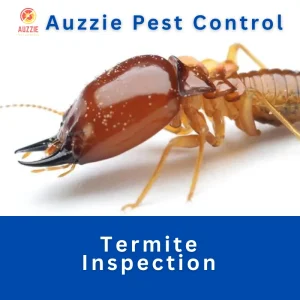
Mud tubes, also called shelter tubes, are one of the clearest signs of subterranean termite activity. These pencil-width tunnels are made from soil, saliva, and termite droppings. They protect termites from dehydration and predators while they travel between the colony and a food source.
Look into the following places for their presence:
- Concrete slab edges
- Brick foundations
- Retaining walls
- Timber stumps
- Piers and posts
- Garage walls
- Areas where timber touches the ground
If you find a mud tube, don’t break it open and assume the problem is gone. Instead, immediately call for expert advice and treatment.
Breaking it open usually just makes the matter worse by making professional treatment less effective. Termites may simply build another route nearby, and the problem remains as it is. Disturbing the tube can make professional treatment less effective.
- Discarded Termite Wings Near Windows and Doors
Termites reproduce by releasing winged swarmers, otherwise known as alates. The usual period of them going through this process is after rain and during warm, humid weather.
After swarming, the termites shed their wings which are usually found on window sills, near sliding doors, around light fittings, in verandahs and on spider webs around the home. This is often the first sign homeowners notice.
Swarming termites don’t necessarily mean your house is already infested, but they do indicate that a colony is active somewhere nearby. A useful clue is that termite wings are all the same size, while flying ant wings are uneven in length.
- Cracked, Bubbling, or Peeling Paint on Walls
Termite activity can cause moisture to build up behind painted surfaces, leading to bubbling or peeling paint.
Blistered Paint, Small Cracks along wall surfaces, and Unexplained Discolourations are a few of the signs one can identify.
Now, because Brisbane homes often experience condensation and occasional roof leaks, this sign is frequently misdiagnosed. The difference is that termite-related paint damage is often accompanied by other indicators such as hollow timber or mud tubes nearby. If the wall feels soft or sounds hollow when tapped, it’s worth investigating further.
- Termite Droppings (Frass) Around Wooden Areas
Drywood termites produce distinctive droppings called frass, which look like tiny wood-coloured pellets or coarse sawdust. These are often found beneath timber furniture, under window frames, near exposed beams, on shelves or floors adjacent to timber walls.
Most people sweep the pellets away without realising they’re termite droppings. If they reappear after cleaning, it’s a strong indication that termites are active inside the timber.
Subterranean termites don’t usually leave visible frass because they use their droppings to build mud tubes, so the presence of pellets often points to a different termite species that still requires professional treatment.
- Doors and Windows Becoming Difficult to Open or Close
When termites feed inside door and window frames, the timber can warp or become distorted. You might notice:
- doors sticking at the top or bottom
- windows that suddenly become hard to slide
- latches that no longer line up properly
- gaps appearing around frames
Homeowners often blame seasonal humidity, and sometimes that’s true. But if a door that has always operated smoothly becomes difficult to open over a short period, especially when combined with other warning signs, termites should be considered.
- Visible Cracks and Structural Damage in Wood
As termites consume the internal structure of timber, the remaining surface can begin to crack or collapse.
Keep a lookout for:
- splitting timber
- sagging ceilings
- uneven floors
- cracked architraves
- timber that breaks apart easily
In severe infestations, you may be able to see galleries or tunnels inside the wood. This level of damage usually means the infestation has been active for a considerable time and should be addressed urgently.
- Clicking or Rustling Sounds From Walls
Faint clicking sounds, Soft rustling inside walls or Tapping noises from timber – Sounds like these are major sign of termite infestation, especially when one hears them at night and in quiet condition when there is no swift wind or rain is there.
Termites are surprisingly noisy when a colony is disturbed. If your house gets quiet at night, listen closely. Soldier termites bang their heads against wood to alert the colony when disturbed. It sounds like a faint, rhythmic tapping inside the wall.
These sounds are subtle, so turn off televisions and other background noise if you’re trying to investigate.
- Small Holes or Tunnels in Wooden Furniture
Look for tiny holes, thin tunnels, or areas where the surface appears intact but feels weak underneath. Antique furniture—timber cabinets—bookshelves—picture frames—stored timber items— Checkout these items as well, if you seeing any other signs.
Remember, Termites don’t just attack structural timber. They also infest!
Note:If you notice damage to furniture, check nearby walls and flooring as well. Furniture infestations can sometimes indicate that termites have moved into the house from an external colony.
Our Termite Treatment Service is best in the industry for such cases.
- Presence of Termite Swarms Around Your Property
Seeing large numbers of flying termites around outdoor lights, verandahs, or garden areas is a sign that a colony is mature and actively reproducing. Swarms are most commonafter rain, during warm evenings, in spring and summer and especially when humidity is high.
Even if the swarm appears to be outside, it’s wise to arrange an inspection. Colonies can be located in garden beds, tree stumps, retaining walls, or neighbouring properties, and termites can travel significant distances underground in search of food.
Termite Damage vs Normal Home Wear
Now, remember not every crack or sticky door means termites are present. Brisbane homes naturally experience movement due to temperature changes, humidity, and foundation settling. Let’s have a practical comparison of when it is ‘Normal Wear’ and when it is actually ‘Termite Activity’.
| Normal wear | Possible termite activity |
| Hairline plaster cracks | Hollow timber and mud tubes |
| Timber darkened by rot | Timber that sounds hollow but looks intact |
| Doors sticking during very humid weather | Sudden frame distortion with other termite signs |
| Flaking paint from age | Bubbling paint with soft or damaged timber behind it |
| Sawdust from carpentry work | Frass pellets repeatedly appearing beneath timber |
A professional inspection is the safest way to tell the difference. We often find termites in homes where owners assumed the symptoms were simply due to the house “getting old”.
Risks of Ignoring Termite Infestation Signs
Ignoring early warning signs can lead to serious consequences, including, Financial burden, Safety hazards, Insurance limitations and Property value impact
Financial burden
Termites can damage: wall frames – roof trusses – flooring systems – verandah supports – built-in cabinetry. Structural repairs are far more expensive than preventative treatment.
Safety hazards
Severely damaged timber can lose its load-bearing capacity. Floors may become unstable, and roof structures can be compromised.
Insurance limitations
A common surprise for homeowners is that most Australian home insurance policies do not cover termite damage. Insurers generally consider it a preventable maintenance issue, which means the repair costs usually fall entirely on the property owner.
Property value impact
Active termite infestations can affect:
- building and pest inspection reports
- buyer confidence
- sale price negotiations
- rental property compliance and tenant satisfaction
Personal Advice: For those who are ignoring termite infestation signs due to cost and monetary issues, get a free quick quote using our Quick Book.
Auzzie Pest Control’s minimal prices include all services and treatments tailored specific to your needs
Professional Termite Inspection and Treatment Solutions
At Auzzie Pest Control, our expert team provides comprehensive termite inspections and treatment solutions tailored to Brisbane homes and investment properties, especially considering your specific property needs and requirement.
Our inspections include:
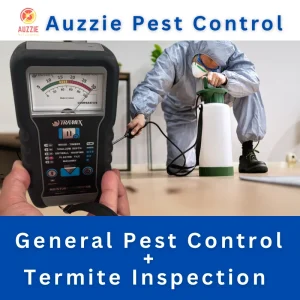
- Roof void and subfloor inspections
- Moisture detection
- Thermal imaging technology
- Inspection of gardens, fences, and retaining walls
- Identification of termite entry points and conducive conditions
Depending on the property, we may recommend:
Chemical soil barriers — A treated zone is applied around the home to prevent termites from entering through the soil.
Termite baiting systems — Bait stations are installed around the property and monitored regularly. Termites feed on the bait and carry it back to the colony, helping eliminate the source of the infestation.
Targeted timber treatments — Infested timber can be treated directly in certain situations to stop active feeding.
Our team will explain the pros and cons of each option and provide a treatment plan that suits the construction type, soil conditions, and level of termite activity.
Tips to Prevent Future Termite Infestations
While no home can be guaranteed termite-free forever, but, good maintenance can significantly reduce the risk.
Reduce moisture around the home
- fix leaking taps and pipes
- repair roof leaks promptly
- ensure gutters and downpipes drain properly
- improve subfloor ventilation
Keep timber away from soil
- store firewood off the ground
- avoid timber garden edging against the house
- keep decking supports properly protected
- maintain clearance between soil and structural timber
Manage garden areas
- keep mulch at least 30 cm away from external walls
- remove dead tree stumps and buried timber
- avoid excessive watering near foundations
- trim vegetation to improve airflow
Schedule annual termite inspections
In Brisbane, we strongly recommend a professional termite inspection every 12 months, and more frequently for high-risk properties such as older Queenslanders, homes with a history of termite activity, or properties surrounded by dense vegetation.
Conclusion: Don’t Wait Until the Damage Is Done
On a final note, remember termites rarely disappear on their own. The earlier you identify the warning signs, the better your chances of avoiding major structural damage and expensive repairs.
Also, if you’ve noticed hollow timber, mud tubes, discarded wings, bubbling paint, frass, sticking doors, structural cracks, unusual noises, furniture damage, or termite swarms, it’s time to have your property checked by a professional.
At Auzzie Pest Control, we’re a Brisbane-based team with extensive experience dealing with the termite pressures that come with Queensland’s warm, humid conditions. We use modern inspection equipment, proven treatment systems, and practical local knowledge to help protect your home or investment property.
Don’t wait until a small warning sign turns into a major repair bill. Contact Auzzie Pest Control today and book a professional termite inspection and get peace of mind that your property is properly protected.